Close Menu
Ztoog
    What's Hot
    Mobile

    iPhone 15 Pro users may still be stuck with a paltry amount of RAM

    The Future

    Google Nest Wi-Fi Pro review – A solid Wi-Fi 6e offering on a friendly budget

    Crypto

    Bitcoin Hashrate And Difficulty Reach New All-Time Highs, What This Means

    Important Pages:
    • About Us
    • Contact us
    • Privacy Policy
    • Terms & Conditions
    Facebook X (Twitter) Instagram Pinterest
    Facebook X (Twitter) Instagram Pinterest
    Ztoog
    • Home
    • The Future

      What is Project Management? 5 Best Tools that You Can Try

      Operational excellence strategy and continuous improvement

      Hannah Fry: AI isn’t as powerful as we think

      FanDuel goes all in on responsible gaming push with new Play with a Plan campaign

      Gettyimages.com Is the Best Website on the Internet Right Now

    • Technology

      Iran war: How could it end?

      Democratic senators question CFTC staffing cuts in Chicago enforcement office

      Google’s Cloud AI lead on the three frontiers of model capability

      AMD agrees to backstop a $300M loan from Goldman Sachs for Crusoe to buy AMD AI chips, the first known case of AMD chips used as debt collateral (The Information)

      Productivity apps failed me when I needed them most

    • Gadgets

      macOS Tahoe 26.3.1 update will “upgrade” your M5’s CPU to new “super” cores

      Lenovo Shows Off a ThinkBook Modular AI PC Concept With Swappable Ports and Detachable Displays at MWC 2026

      POCO M8 Review: The Ultimate Budget Smartphone With Some Cons

      The Mission: Impossible of SSDs has arrived with a fingerprint lock

      6 Best Phones With Headphone Jacks (2026), Tested and Reviewed

    • Mobile

      Android’s March update is all about finding people, apps, and your missing bags

      Watch Xiaomi’s global launch event live here

      Our poll shows what buyers actually care about in new smartphones (Hint: it’s not AI)

      Is Strava down for you? You’re not alone

      The Motorola Razr FIFA World Cup 2026 Edition was literally just unveiled, and Verizon is already giving them away

    • Science

      Big Tech Signs White House Data Center Pledge With Good Optics and Little Substance

      Inside the best dark matter detector ever built

      NASA’s Artemis moon exploration programme is getting a major makeover

      Scientists crack the case of “screeching” Scotch tape

      Blue-faced, puffy-lipped monkey scores a rare conservation win

    • AI

      Online harassment is entering its AI era

      Meet NullClaw: The 678 KB Zig AI Agent Framework Running on 1 MB RAM and Booting in Two Milliseconds

      New method could increase LLM training efficiency | Ztoog

      The human work behind humanoid robots is being hidden

      NVIDIA Releases DreamDojo: An Open-Source Robot World Model Trained on 44,711 Hours of Real-World Human Video Data

    • Crypto

      Google paid startup Form Energy $1B for its massive 100-hour battery

      Ethereum Breakout Alert: Corrective Channel Flip Sparks Impulsive Wave

      Show Your ID Or No Deal

      Jane Street sued for alleged front-running trades that accelerated Terraform Labs meltdown

      Bitcoin Trades Below ETF Cost-Basis As MVRV Signals Mounting Pressure

    Ztoog
    Home » Lab mice might be doing their own experiments
    Science

    Lab mice might be doing their own experiments

    Facebook Twitter Pinterest WhatsApp
    Lab mice might be doing their own experiments
    Share
    Facebook Twitter LinkedIn Pinterest WhatsApp

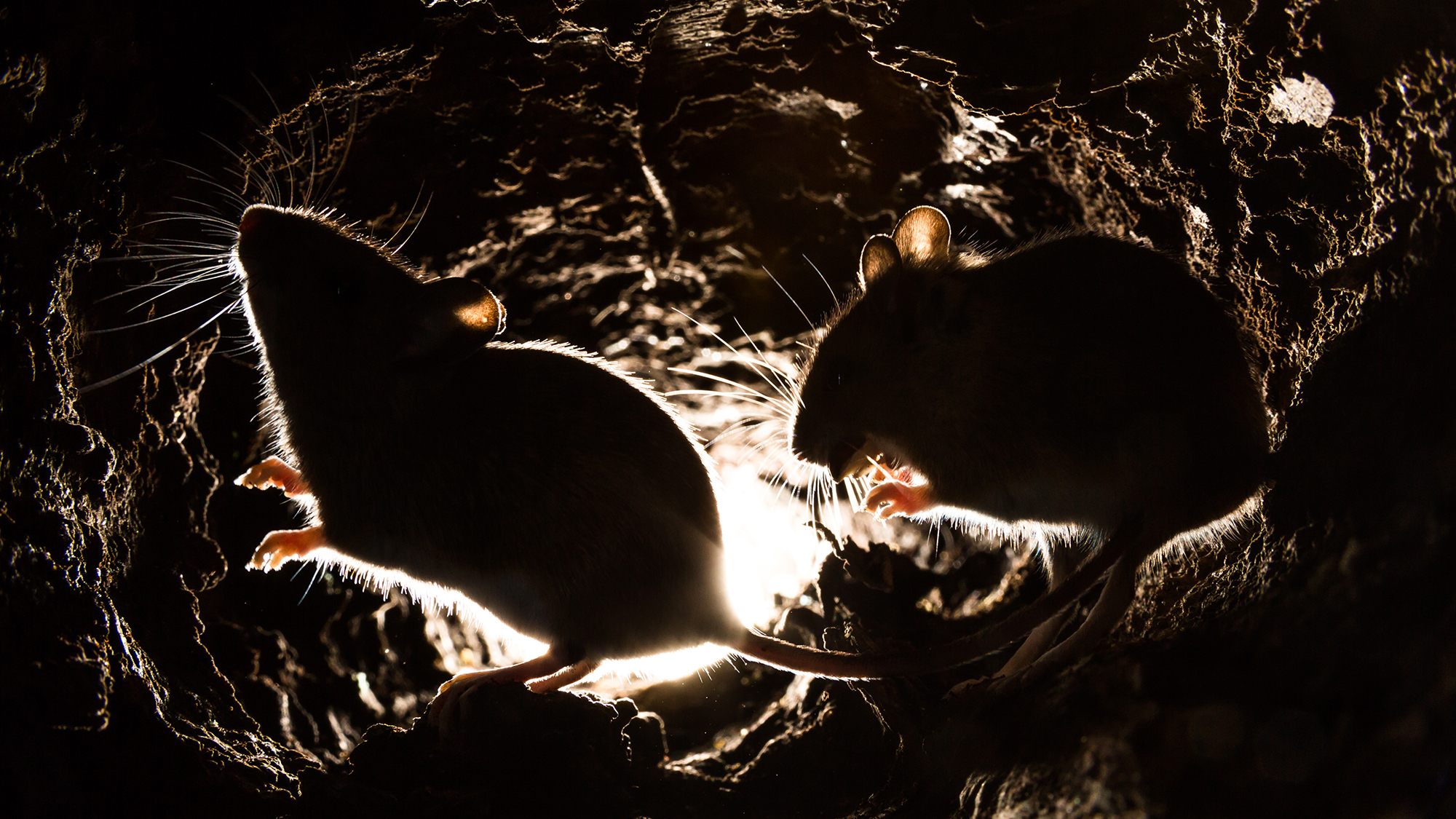
    It’s lengthy been recognized that mice can be educated to carry out easy duties in change for a reward. Bribe a hungry mouse with a morsel of meals or a thirsty mouse with a drop of water and you may encourage it to navigate a maze or click on a specific button. But generally, mice don’t act as anticipated, failing to finish the duty at hand. Often, researchers have dismissed these actions as easy errors, ensuing from inattention or disengagement. Yet, a research revealed April 26 within the journal Current Biology suggests, there’s extra occurring: mice can perceive the foundations of a job and nonetheless deviate in their behaviors, probably testing their own hypotheses and making an attempt to study extra about their environment. 

    “These mice have a richer internal life than we probably give them credit for. They are not just stimulus response machines. They may have things like strategies.”

    It seems that the choices mice make throughout behavioral checks are extra difficult than simply fundamental reward-seeking selections. During human-imposed trials within the lab, mice could be regularly exploring and re-testing the foundations of their setting and performing their own small experiments.

    [ Related: Mice may be able to recognize their own reflections ]

    The findings broaden our understanding of what’s taking place inside rodent brains and point out mice and different non-verbal animals might know greater than they let on. The analysis might finally assist make clear the neurological underpinnings of human habits as nicely. “These mice have a richer internal life than we probably give them credit for,” says Kishore Kuchibhotla, senior research writer and an assistant professor of neuroscience at Johns Hopkins University. “They are not just stimulus response machines. They may have things like strategies,” he provides.

    Mice on the steering wheel

    The work builds on earlier analysis that examined mice on a easy licking job and provides a stage of complexity with a two-choice take a look at to parse mouse motivations. Kuchibhotla and lead research writer Ziyi Zhu, a neuroscience PhD scholar, educated thirsty mice, restrained in place,  to spin a wheel with their entrance legs in a sure route in response to a sound. One tone corresponded with turning the wheel to the appropriate, a second tone with spinning it to the left. If a mouse responded to both of the sounds with the right motion, it might get a tiny cup of water. If it spun the wheel the unsuitable approach or didn’t spin it in any respect, nothing occurred. 

    Throughout 1000’s of trials involving 13 mice, the researchers tracked mouse selection, response velocity, and accuracy, they usually seen a number of patterns. For one, mice appeared to get extra correct in their selections because the trials progressed, indicating they have been mastering the duty at hand. Individual mice additionally appeared to have quirks and preferences when it got here to choosing a wheel route. And even when mice reached an knowledgeable stage of wheel-steering competency, they might nonetheless show quick bouts of unsuitable responses–usually spinning the wheel in the identical route repeatedly, no matter which sound was performed. 

    [ Related: How video game tech, AI, and computer vision help decode animal pain and behavior ]

    To higher perceive what was taking place throughout these bouts, Kuchibhotla and Zhu instituted “probe” trials, the place they briefly stopped rewarding the mice for proper solutions. Very shortly, mice modified course, stopped exploring, and commenced to answer the appropriate and left sound cues extra precisely, in accordance with the sample they’d been educated on–indicating the mice understood what they have been purported to do to get the cup of water, and had been purposefully forsaking reward.

    “As behavioral neuroscientists who work in animal models, the onus is on us to come up with more clever and rich ways to extract meaning from nonverbal animals’ [actions],” says Dr. Brian Sweis PhD, a neuroscientist and psychiatrist at Mount Sinai who conducts animal habits analysis however was not concerned within the new research. “I think this paper did a really nice job of that… it was a beautiful deep dive into a behavioral analysis,” he provides–pointing particularly to the follow-up examination of the preliminary trial knowledge and the methods the researchers different their experiments. 

    “It may look like the animal is making a ton of errors, but during those errors, it’s actually getting smarter.”

    Using a computational mannequin, Zhu and Kuchibhotla assessed how every trial end result associated to those earlier than and after it and what components appeared to be influencing mouse habits. They discovered that reward performed an enormous function, however so did a bias in the direction of rotating the wheel in a most popular route, which differed from mouse to mouse. Yet this bias wasn’t mounted–mice would change it up, spinning to each side over the course of many trials and when the researchers offered mice with sound prompts for completely their most popular route, the mice would exhibit extra durations of rotating the wheel to their non-preferred aspect. Taken altogether, these observations present a dynamic selection bias that the researchers hypothesize is a studying technique. 

    Learning with out language

     “Mice are surprisingly using higher-order approaches to learn even simple tasks, which may seem maladaptive. It may look like the animal is making a ton of errors, but during those errors, it’s actually getting smarter,” says Kuchibhotla. “We put these animals in these bizarre situations. They don’t know when the environment may change. They don’t know when we may change the rules on them. There’s value in having this sort of continuous exploration.”

    Where people can depend on language to know an project, non-verbal animals have to seek out out for themselves what the foundations of a specific state of affairs are. Kuchibhotla suggests this distinction might account for why mice tackle this regularly shifting method to a job. “Verbal or written instructions collapse the mental space of exploration. Once you know what you’re supposed to do, there’s no need to explore. That’s one of the hypotheses we have–that in the absence of instructions humans will [also] engage in continuous exploration.” He’s at present conducting follow-up analysis in human behavioral trials to find out if that’s true. 

    Finding classes in mouse errors

    Other follow-up work contains monitoring the mice’s neural exercise as they interact within the wheel spinning job, coaching and testing the mice on a number of duties without delay to see how methods change, and working cognitively impaired mice by way of related checks which might in the end reveal underlying patterns in human neurological illnesses like Alzheimer’s.

    There are limitations to what this single research proves. Despite all of the researchers’ carefulness, one thing less complicated than strategizing might nonetheless be at play, gives Sweis. For occasion, perhaps the mice modified the route they spun the wheel in now and again as a result of their entrance legs received drained. “I don’t think that negates anything [the study authors are] showing here, but physical factors could be a driver,” says Sweis. “We have to understand the brian in the context of the whole body.”

    Still although, inspecting the selection course of, he explains, “gives us insight into the many different ways the brain can work” and might make clear what’s taking place when issues begin to go unsuitable. He suggests one other follow-up venture might take a look at how ageing influences the exploration course of and if job flexibility shifts or declines with age. There are many doable offshoots for attention-grabbing analysis, and the research “serves as a rich foundation for us to understand biology a little bit more.” 

    It reframes a long time of rodent habits outcomes, the place errors have been dismissed as uninteresting failures. “Animals need to make mistakes to learn,” says Sweis–and there’s heaps we will study from them too.

    Share. Facebook Twitter Pinterest LinkedIn WhatsApp

    Related Posts

    Science

    Big Tech Signs White House Data Center Pledge With Good Optics and Little Substance

    Science

    Inside the best dark matter detector ever built

    Science

    NASA’s Artemis moon exploration programme is getting a major makeover

    Science

    Scientists crack the case of “screeching” Scotch tape

    Science

    Blue-faced, puffy-lipped monkey scores a rare conservation win

    Science

    Big Tech Says Generative AI Will Save the Planet. It Doesn’t Offer Much Proof

    Science

    The experiments that could finally explain gravity

    Science

    Weird inside-out planet system may have formed one world at a time

    Leave A Reply Cancel Reply

    Follow Us
    • Facebook
    • Twitter
    • Pinterest
    • Instagram
    Top Posts
    The Future

    Meta faces $600M competition damages claim in Spain as media owners pursue privacy breach lawsuit

    Meta is dealing with a significant authorized problem and damages claim in Spain that argues…

    Science

    Astronomers discover new moons orbiting Uranus and Neptune

    Astronomers are including three newly found moons to our photo voltaic system’s rising record of…

    Science

    India’s Chandrayaan-3 launches to explore moon’s water-rich south pole

    Chandrayaan-3 is on its manner to the moonISRO Official India has efficiently launched its newest…

    Gadgets

    The best sunset lamps of 2023

    We could earn income from the merchandise obtainable on this web page and take part…

    Crypto

    Litecoin Plunges To Sub-$70 Level

    Litecoin (LTC), the altcoin usually dubbed as “silver to Bitcoin’s gold,” has discovered itself caught…

    Our Picks
    Mobile

    OPPO and OnePlus could leave France. Europe next?

    Technology

    A Fun Augmented Reality App for Spelling Practice

    Crypto

    Solana Welcomes Ethereum Prodigy – Impact On SOL Price

    Categories
    • AI (1,560)
    • Crypto (1,826)
    • Gadgets (1,870)
    • Mobile (1,910)
    • Science (1,939)
    • Technology (1,862)
    • The Future (1,716)
    Most Popular
    Technology

    Change Healthcare hack continues to inflict major damage

    Science

    A New Proof Moves the Needle on a Sticky Geometry Problem

    The Future

    Turtle Beach is buying gamepad maker PDP

    Ztoog
    Facebook X (Twitter) Instagram Pinterest
    • Home
    • About Us
    • Contact us
    • Privacy Policy
    • Terms & Conditions
    © 2026 Ztoog.

    Type above and press Enter to search. Press Esc to cancel.