Close Menu
Ztoog
    What's Hot
    Gadgets

    More Privacy: WhatsApp Users Will Soon Be Able To Hide Their Phone Numbers

    Mobile

    Samsung Galaxy S24 Ultra vs. Apple iPhone 15 Pro Max

    Crypto

    Machine Learning Algorithm Predicts 17.66% Rise In Bitcoin Price, Here’s The Target

    Important Pages:
    • About Us
    • Contact us
    • Privacy Policy
    • Terms & Conditions
    Facebook X (Twitter) Instagram Pinterest
    Facebook X (Twitter) Instagram Pinterest
    Ztoog
    • Home
    • The Future

      What is Project Management? 5 Best Tools that You Can Try

      Operational excellence strategy and continuous improvement

      Hannah Fry: AI isn’t as powerful as we think

      FanDuel goes all in on responsible gaming push with new Play with a Plan campaign

      Gettyimages.com Is the Best Website on the Internet Right Now

    • Technology

      Iran war: How could it end?

      Democratic senators question CFTC staffing cuts in Chicago enforcement office

      Google’s Cloud AI lead on the three frontiers of model capability

      AMD agrees to backstop a $300M loan from Goldman Sachs for Crusoe to buy AMD AI chips, the first known case of AMD chips used as debt collateral (The Information)

      Productivity apps failed me when I needed them most

    • Gadgets

      macOS Tahoe 26.3.1 update will “upgrade” your M5’s CPU to new “super” cores

      Lenovo Shows Off a ThinkBook Modular AI PC Concept With Swappable Ports and Detachable Displays at MWC 2026

      POCO M8 Review: The Ultimate Budget Smartphone With Some Cons

      The Mission: Impossible of SSDs has arrived with a fingerprint lock

      6 Best Phones With Headphone Jacks (2026), Tested and Reviewed

    • Mobile

      Android’s March update is all about finding people, apps, and your missing bags

      Watch Xiaomi’s global launch event live here

      Our poll shows what buyers actually care about in new smartphones (Hint: it’s not AI)

      Is Strava down for you? You’re not alone

      The Motorola Razr FIFA World Cup 2026 Edition was literally just unveiled, and Verizon is already giving them away

    • Science

      Big Tech Signs White House Data Center Pledge With Good Optics and Little Substance

      Inside the best dark matter detector ever built

      NASA’s Artemis moon exploration programme is getting a major makeover

      Scientists crack the case of “screeching” Scotch tape

      Blue-faced, puffy-lipped monkey scores a rare conservation win

    • AI

      Online harassment is entering its AI era

      Meet NullClaw: The 678 KB Zig AI Agent Framework Running on 1 MB RAM and Booting in Two Milliseconds

      New method could increase LLM training efficiency | Ztoog

      The human work behind humanoid robots is being hidden

      NVIDIA Releases DreamDojo: An Open-Source Robot World Model Trained on 44,711 Hours of Real-World Human Video Data

    • Crypto

      SEC Vs. Justin Sun Case Ends In $10M Settlement

      Google paid startup Form Energy $1B for its massive 100-hour battery

      Ethereum Breakout Alert: Corrective Channel Flip Sparks Impulsive Wave

      Show Your ID Or No Deal

      Jane Street sued for alleged front-running trades that accelerated Terraform Labs meltdown

    Ztoog
    Home » Understanding our place in the universe | Ztoog
    AI

    Understanding our place in the universe | Ztoog

    Facebook Twitter Pinterest WhatsApp
    Understanding our place in the universe | Ztoog
    Share
    Facebook Twitter LinkedIn Pinterest WhatsApp

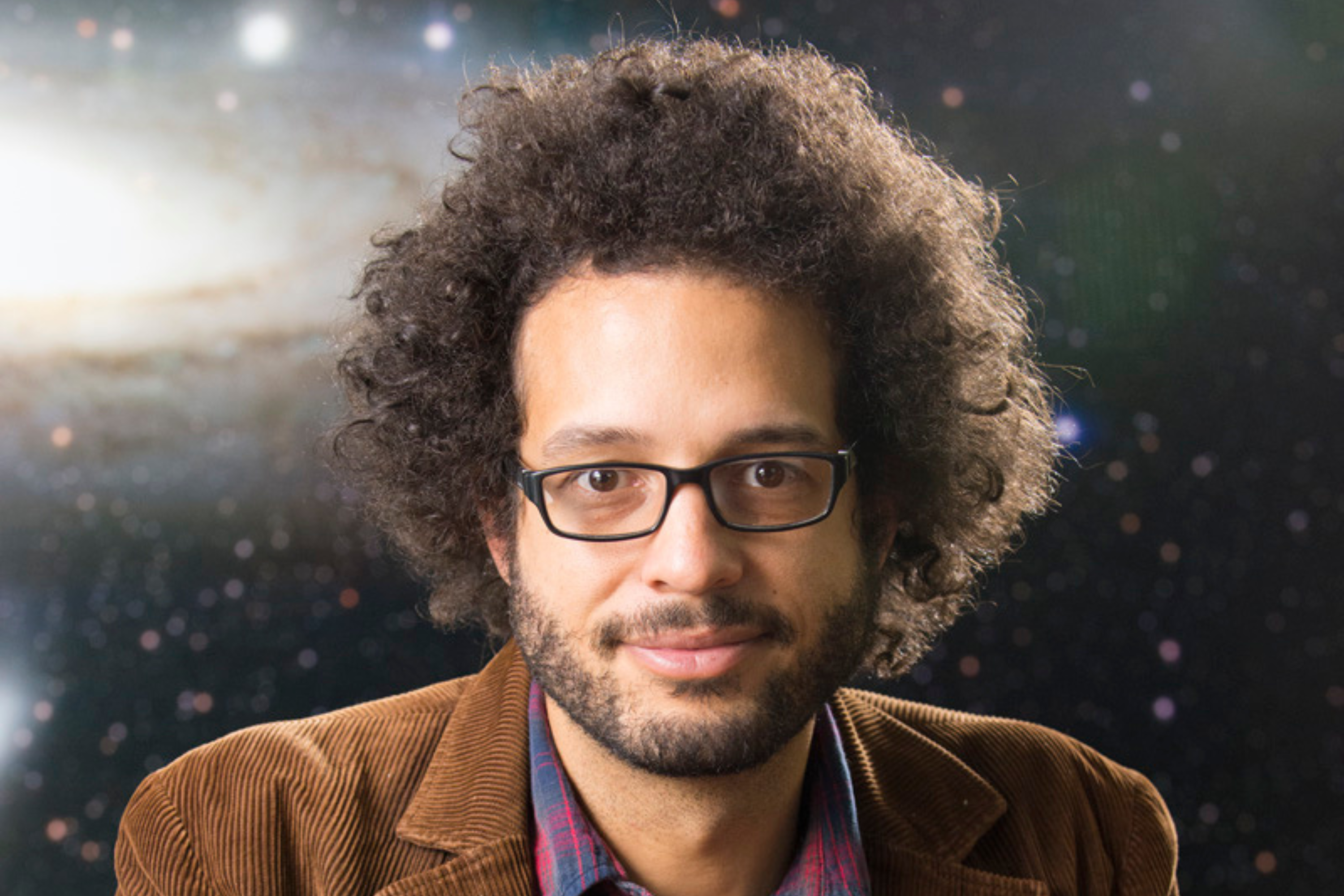
    Brian Nord first fell in love with physics when he was an adolescent rising up in Wisconsin. His highschool physics program wasn’t distinctive, and he typically struggled to maintain up with class materials, however these difficulties did nothing to dampen his curiosity in the topic. In addition to the essential curriculum, college students have been inspired to independently examine subjects they discovered fascinating, and Nord rapidly developed a fascination with the cosmos. “A touchstone that I often come back to is space,” he says. “The mystery of traveling in it and seeing what’s at the edge.”

    Nord was an avid reader of comedian books, and astrophysics appealed to his want to turn into part of one thing larger. “There always seemed to be something special about having this kinship with the universe around you,” he recollects. “I always thought it would be cool if I could have that deep connection to physics.”

    Nord started to domesticate that connection as an undergraduate at The Johns Hopkins University. After graduating with a BA in physics, he went on to check at the University of Michigan, the place he earned an MS and PhD in the identical discipline. By this level, he was already considering huge, however he wished to suppose even larger. This want for a extra complete understanding of the universe led him away from astrophysics and towards the extra expansive discipline of cosmology. “Cosmology deals with the whole kit and caboodle, the whole shebang,” he explains. “Our biggest questions are about the origin and the fate of the universe.”

    Dark mysteries

    Nord was notably in components of the universe that may’t be noticed by way of conventional means. Evidence means that darkish matter makes up the majority of mass in the universe and gives most of its gravity, however its nature largely stays in the realm of speculation and hypothesis. It doesn’t soak up, mirror, or emit any kind of electromagnetic radiation, which makes it practically unimaginable for scientists to detect. But whereas darkish matter gives gravity to drag the universe collectively, an equally mysterious pressure — darkish vitality — is pulling it aside. “We know even less about dark energy than we do about dark matter,” Nord explains.

    For the previous 15 years, Nord has been trying to shut that hole in our information. Part of his work focuses on the statistical modeling of galaxy clusters and their means to distort and amplify gentle because it travels by way of the cosmos. This impact, which is named robust gravitational lensing, is a useful gizmo for detecting the affect of darkish matter on gravity and for measuring how darkish vitality impacts the enlargement price of the universe.

    After incomes his PhD, Nord remained at the University of Michigan to proceed his analysis as a part of a postdoctoral fellowship. He presently holds a place at the Fermi National Accelerator Laboratory and is a senior member of the Kavli Institute for Cosmological Physics at the University of Chicago. He continues to analyze questions on the origin and future of the universe, however his more moderen work has additionally centered on enhancing the methods in which we make scientific discoveries.

    AI powerup

    When it involves addressing huge questions on the nature of the cosmos, Nord has persistently run into one main drawback: though his mastery of physics can typically make him really feel like a superhero, he’s solely human, and people aren’t good. They make errors, adapt slowly to new info, and take a very long time to get issues performed.

    The answer, Nord argues, is to transcend the human, into the realm of algorithms and fashions. As a part of Fermilab’s Artificial Intelligence Project, he spends his days educating machines how you can analyze cosmological information, a activity for which they’re higher suited than most human scientists. “Artificial intelligence can give us models that are more flexible than what we can create ourselves with pen and paper,” Nord explains. “In a lot of cases, it does better than humans do.”

    Nord is continuous this analysis at MIT as a part of the Martin Luther King Jr. (MLK) Visiting Scholars and Professors Program. Earlier this 12 months, he joined the Laboratory for Nuclear Science (LNS), with Jesse Thaler in the Department of Physics and Center for Theoretical Physics (CTP) as his college host. Thaler is the director of the National Science Foundation’s Institute for Artificial Intelligence and Fundamental Interactions (IAIFI). Since arriving on campus, Nord has centered his efforts on exploring the potential of AI to design new scientific experiments and devices. These processes ordinarily take an infinite period of time, he explains, however AI might quickly speed up them. “Could we design the next particle collider or the next telescope in less than five years, instead of 30?” he wonders.

    But if Nord has realized something from the comics of his youth, it’s that with nice energy comes nice duty. AI is an unimaginable scientific asset, however it can be used for extra nefarious functions. The identical pc algorithms that might construct the subsequent particle collider additionally underlie issues like facial recognition software program and the danger evaluation instruments that inform sentencing selections in prison court docket. Many of those algorithms are deeply biased towards folks of shade. “It’s a double-edged sword,” Nord explains. “Because if [AI] works better for science, it works better for facial recognition. So, I’m working against myself.”

    Culture change superpowers

    In current years, Nord has tried to develop strategies to make the software of AI extra moral, and his work has centered on the broad intersections between ethics, justice, and scientific discovery. His efforts to fight racism in STEM have established him as a frontrunner in the motion to deal with inequities and oppression in tutorial and analysis environments. In June of 2020, he collaborated with members of Particles for Justice — a bunch that boasts MIT professors Daniel Harlow and Tracy Slatyer, in addition to former MLK Visiting Scholar and CTP researcher Chanda Prescod-Weinstein — to create the tutorial Strike for Black Lives. The strike, which emerged as a response to the police killings of George Floyd, Breonna Taylor, and plenty of others, known as on the tutorial neighborhood to take a stand towards anti-Black racism.

    Nord can also be the co-author of Black Light, a curriculum for studying about Black experiences, and the co-founder of Change Now, which produced an inventory of requires motion to make a extra simply laboratory setting at Fermilab. As the co-founder of Deep Skies, he additionally strives to foster justice-oriented analysis communities freed from conventional hierarchies and oppressive energy buildings. “The basic idea is just humanity over productivity,” he explains.

    This work has led Nord to rethink what motivated him to pursue a profession in physics in the first place. When he first found his ardour for the topic as an adolescent, he knew he wished to make use of physics to assist folks, however he wasn’t positive how. “I was thinking I’d make some technology that will save lives, and I still hope to do that,” he says. “But I think maybe more of my direct impact, at least in this stage of my career, is in trying to change the culture.”

    Physics might not have granted Nord flight or X-ray imaginative and prescient — not but, a minimum of. But over the course of his lengthy profession, he has found a extra substantial energy. “If I can understand the universe,” he says, “maybe that will help me understand myself and my place in the world and our place as humanity.”

    Share. Facebook Twitter Pinterest LinkedIn WhatsApp

    Related Posts

    AI

    Online harassment is entering its AI era

    AI

    Meet NullClaw: The 678 KB Zig AI Agent Framework Running on 1 MB RAM and Booting in Two Milliseconds

    AI

    New method could increase LLM training efficiency | Ztoog

    AI

    The human work behind humanoid robots is being hidden

    AI

    NVIDIA Releases DreamDojo: An Open-Source Robot World Model Trained on 44,711 Hours of Real-World Human Video Data

    AI

    Personalization features can make LLMs more agreeable | Ztoog

    AI

    AI is already making online crimes easier. It could get much worse.

    AI

    NVIDIA Researchers Introduce KVTC Transform Coding Pipeline to Compress Key-Value Caches by 20x for Efficient LLM Serving

    Leave A Reply Cancel Reply

    Follow Us
    • Facebook
    • Twitter
    • Pinterest
    • Instagram
    Top Posts
    The Future

    Urlebird Review: Safety, Features, and Alternatives

    The ban on TikTookay in a number of areas gave rise to a number of…

    Science

    NASA’s UFO panel faces messy data

    After a long time of the US authorities typically avoiding dialogue of UFOs, NASA and…

    The Future

    Take Care of Your Eyes Naturally With These 10 Tips

    It’s simple to take your eyes without any consideration, however imaginative and prescient issues can…

    Technology

    Phanteks unveils 5.5″ hi-res display for your PC case

    In transient: Phanteks is now accepting pre-orders for a 5.5-inch LCD panel designed to spruce…

    Mobile

    TikTok Boom! App is banned in Montana and both Apple and Google are on the line

    Montana Governor Greg Gianforte lastly affixed his signature to the invoice that bans short-form video…

    Our Picks
    Science

    How did water get on Earth?

    Science

    10 Facts That Prove the World Is in a Climate Emergency

    Crypto

    Binance Survey Says 88% Of Institutional Users Have a Positive Outlook For Crypto Assets

    Categories
    • AI (1,560)
    • Crypto (1,827)
    • Gadgets (1,870)
    • Mobile (1,910)
    • Science (1,939)
    • Technology (1,862)
    • The Future (1,716)
    Most Popular
    Gadgets

    GE Profile Launches Smart Indoor Smoker At CES 2024

    The Future

    The Metal Gear Solid: Master Collection is an exhaustive bundle of stealth classics

    Crypto

    CryptoPunks Toughness Tested as They Lost 60%

    Ztoog
    Facebook X (Twitter) Instagram Pinterest
    • Home
    • About Us
    • Contact us
    • Privacy Policy
    • Terms & Conditions
    © 2026 Ztoog.

    Type above and press Enter to search. Press Esc to cancel.