
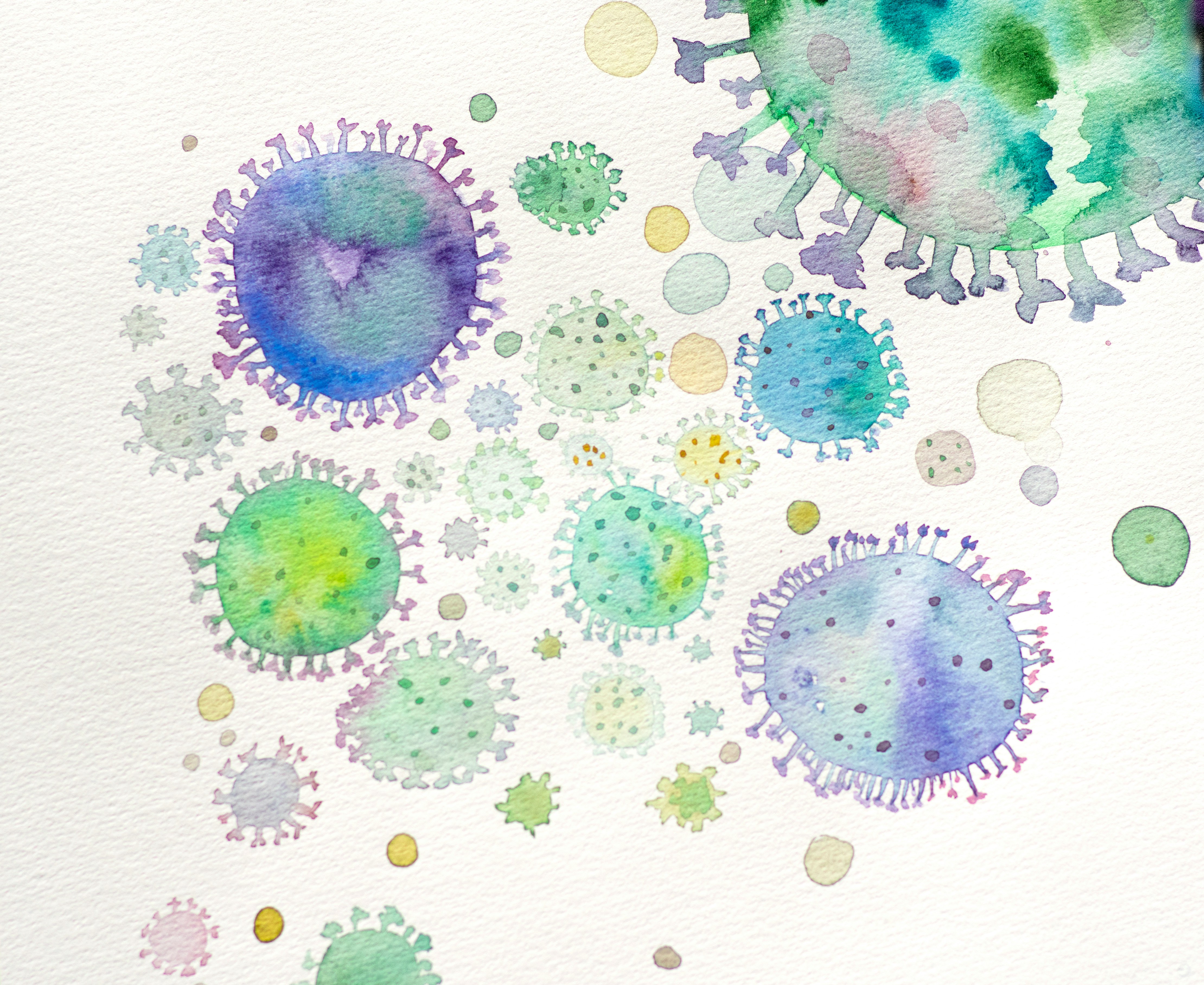
Deep beneath the Pacific Ocean, in a dark, cold, and seemingly lifeless expanse of seabed, lies a secret that rewrites the rulebook for survival. It’s a place where time moves differently, and life clings on in ways we once thought impossible. Recently, a team of scientists drilled into this ancient sediment and uncovered something astonishing: living microbes that had been in a dormant, sleep-like state since the time of the dinosaurs. For scientists, discovering life in such an ancient, oxygen-starved environment was like hitting a jackpot they never knew existed. The odds felt astronomical, far longer than any you’d find at fortunica casino. Yet, this discovery wasn’t about luck; it was about the incredible, unyielding resilience of life itself, a story of survival on a geological timescale.
The Discovery: A Journey to the Seafloor
The story begins aboard the scientific drilling vessel JOIDES Resolution, on an expedition to the South Pacific Gyre. This remote ocean region is often called a “marine desert” because its waters contain so few nutrients, meaning very little life can survive on the surface. Scientists hypothesised that this lack of “marine snow”—the organic debris that drifts down to feed deep-sea ecosystems—would make the seafloor beneath it one of the most lifeless places on Earth. They drilled over 100 metres into the seabed, extracting core samples of clay and sediment that hadn’t seen the light of day for over 100 million years. They expected to find nothing but sterile mud, but what they found would challenge the very definition of where life can exist.
This initial discovery set the stage for a groundbreaking experiment. The team wasn’t just content with finding these ancient microbes; they wanted to see if they could wake them up.
Waking the Giant: How Do You Revive a 100-Million-Year-Old Microbe?
Bringing a 100-million-year-old organism back to life sounds like something out of a science fiction film, but the process was a masterful display of patience and microbiology. The challenge was to provide the right conditions to coax these dormant life forms out of their long slumber without killing them.
From Seabed to Petri Dish
First, the scientists had to work in an ultra-clean laboratory on the ship to prevent contamination from modern-day bacteria. They carefully sliced the core samples, taking material from the very centre to ensure it was pristine. These ancient clay samples were then transferred to sterile glass vials. The microbes within were in a state of near-total shutdown, with barely any detectable metabolic activity. They were alive, but only just, waiting for a signal that it was safe to wake up.
Just Add Food: The Surprisingly Simple Revival
The revival process itself was surprisingly straightforward. The scientists created a “menu” of nutrients—compounds containing carbon and nitrogen—that modern bacteria are known to consume. They injected these food sources into the vials with the ancient sediment. The process of waking them up followed a few key steps:
- Incubation: The samples were carefully incubated and kept at a stable temperature, mimicking a more hospitable environment.
- Feeding: The nutrient-rich mixture was provided, offering the microbes their first potential “meal” in millions of years.
- Observation: Scientists patiently monitored the samples, looking for any signs of metabolic activity—an indication that the bacteria were consuming the food and beginning to multiply.
- Success: Incredibly, within days, the microbes began to stir. After a few weeks, they were thriving, growing, and multiplying as if no time had passed at all. Up to 99% of the microbes present in the sediment began to feast and flourish.
This astonishing success proved that life could not only persist but could also be fully revived after an unimaginably long period of dormancy.
The Secrets of Survival: What Makes These Microbes So Resilient?
How did these tiny organisms survive for so long in such a punishing environment with no fresh food and barely any oxygen? Their resilience comes down to a combination of an incredibly slow-paced existence and the unique protections offered by their deep-sea home.
The Power of a Slow Metabolism
The key to their survival was entering a state of extreme dormancy, a form of suspended animation. Their metabolic rate—the speed at which they use energy—slowed to almost nothing. They weren’t growing or reproducing; they were simply existing, using the absolute minimum energy required to repair their cellular components and stay viable. This is the ultimate survival strategy: when resources are scarce, you don’t move, you don’t eat, you just wait.
An Environment Without Predators
While the deep-sea mud is low in food and oxygen, it’s also free from the threats found elsewhere on the planet. There are no predators, no harsh UV radiation, and no drastic environmental shifts. Buried deep beneath the seafloor, the microbes were in one of the most stable environments on Earth, a quiet tomb that paradoxically became a perfect cradle for long-term survival.
What Does This Mean for Science and the Search for Life?
The revival of the Lazarus bacterium is more than just a cool science experiment; it has profound implications for how we view life on our own planet and our search for it elsewhere in the universe.
Redefining the Limits of Life on Earth
This discovery fundamentally expands our understanding of where life can exist. It shows that entire ecosystems can survive on energy levels far too low to support the life we’re familiar with. The seafloor is not a barren wasteland but a vast reservoir of dormant life, a kind of global seed bank. It suggests that life is far more tenacious and widespread than we ever imagined.
Implications for Astrobiology
The findings are particularly exciting for astrobiologists, the scientists who search for life beyond Earth. If microbes can survive in a dormant state for 100 million years on our planet, it’s plausible they could do the same on others. A planet like Mars, which was once warmer and wetter, could theoretically still harbour dormant microbial life deep beneath its surface, protected from the harsh radiation on the surface. This discovery gives us new hope that we might one day find evidence of life—active or sleeping—on another world.
The Unseen Kingdom Beneath Our Feet
The story of the Lazarus bacterium is a powerful lesson in humility and wonder. It reminds us that even in the most desolate corners of our world, life has found a way to hold on, waiting patiently for its moment to awaken. Our planet still holds profound secrets, and its tiniest inhabitants have the most astonishing stories to tell. The next time you look at a seemingly empty landscape—or even the deep ocean on a map—consider the resilient, ancient life that might be thriving just out of sight. What other wonders are waiting to be discovered?