
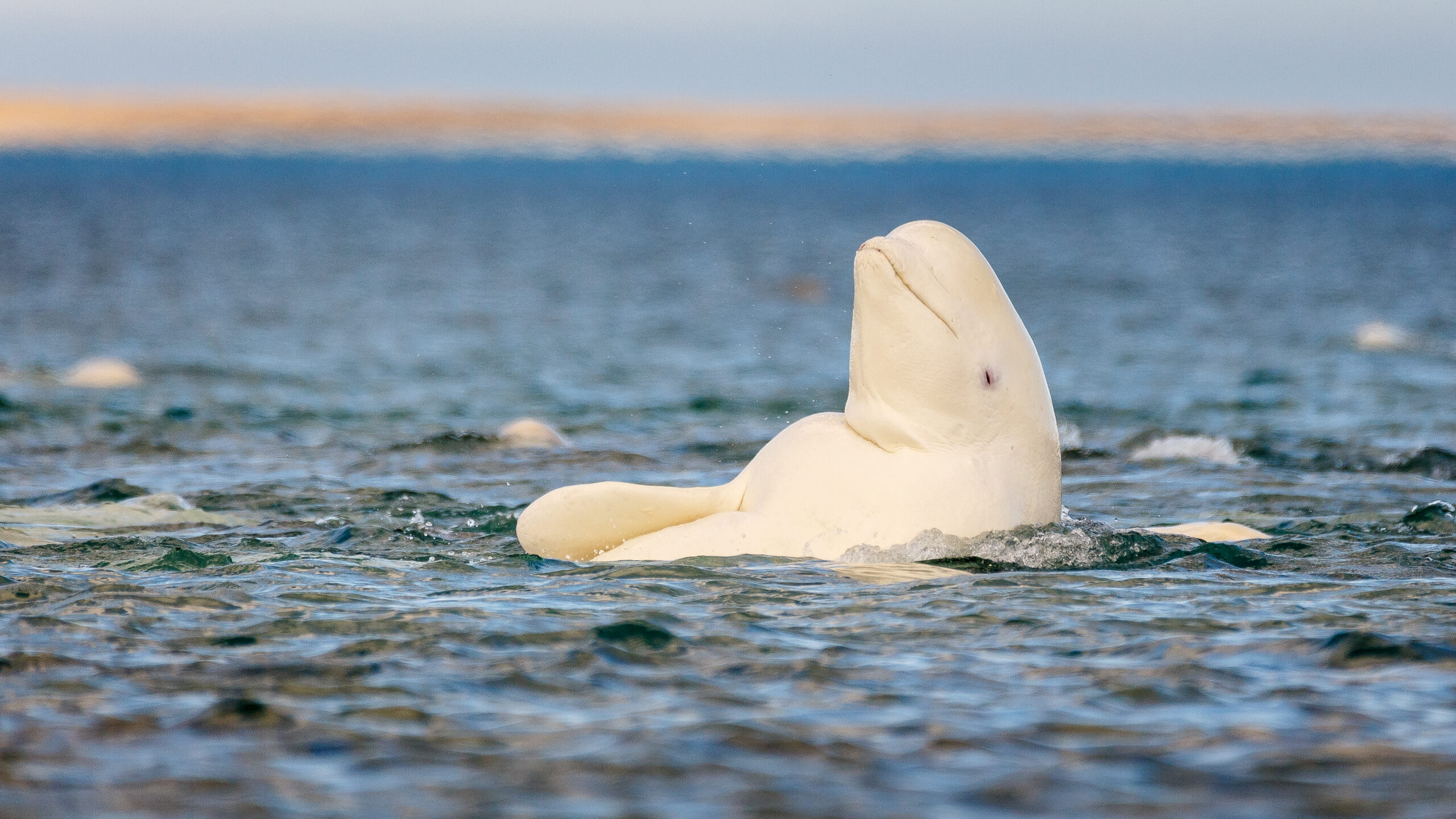
In several hours of underwater video recordings from a New York aquarium, a beluga whale named Natasha shows behaviors like stretching her neck, spinning, nodding, and shaking her head in front of a two-way mirror. Her daughter Maris does similar things. A recent study published in PLOS One suggests that these animals display signs of mirror self-recognition, a cognitive ability linked to self-awareness, which had not been observed before in beluga whales.
If these findings are confirmed, belugas would join a relatively small group of animals. The mirror self-recognition test (MSR) has been passed, with different degrees of certainty, by humans (around the age of two), a few great apes (chimpanzees, bonobos, orangutans, and, somewhat controversially, gorillas), Asian elephants, bottlenose dolphins, probably magpies, possibly orcas, and, interestingly, a cleaner wrasse. Other animals, including dogs, cats, and monkeys, have been tested but did not pass, despite assumptions about their self-awareness.
Examining the mirror
So, what is this test, and what is it supposed to show?
The process involves researchers placing a mark on a part of the animal’s body that it cannot see without a reflection, while the animal is not watching. Then a mirror is placed in front of it as researchers observe. If the animal touches or inspects the mark while looking at its reflection, it suggests that the animal recognizes the image in the mirror as itself. The test is simple and easy to run, yet very few species manage to pass it.
Why does this count as a test of self-awareness? The idea, developed by psychologist Gordon Gallup, who created the test in 197, is that using a mirror as a tool to look at oneself requires a mental concept of oneself as a separate being. In this sense, a piece of reflective glass can open up many cognitive possibilities.