
The separate trajectories of cryptocurrency and artificial intelligence are no longer running in parallel; they are converging into a unified technological and economic force. This fusion is reshaping everything from physical infrastructure and financial markets to the fundamental concept of economic agency. By mid-2026, the “hype cycle” is giving way to tangible, often disruptive, real-world developments that mark a new era of machine-driven commerce and decentralized intelligence.
The Great Mining Pivot: From Hashrate to High-Performance Compute
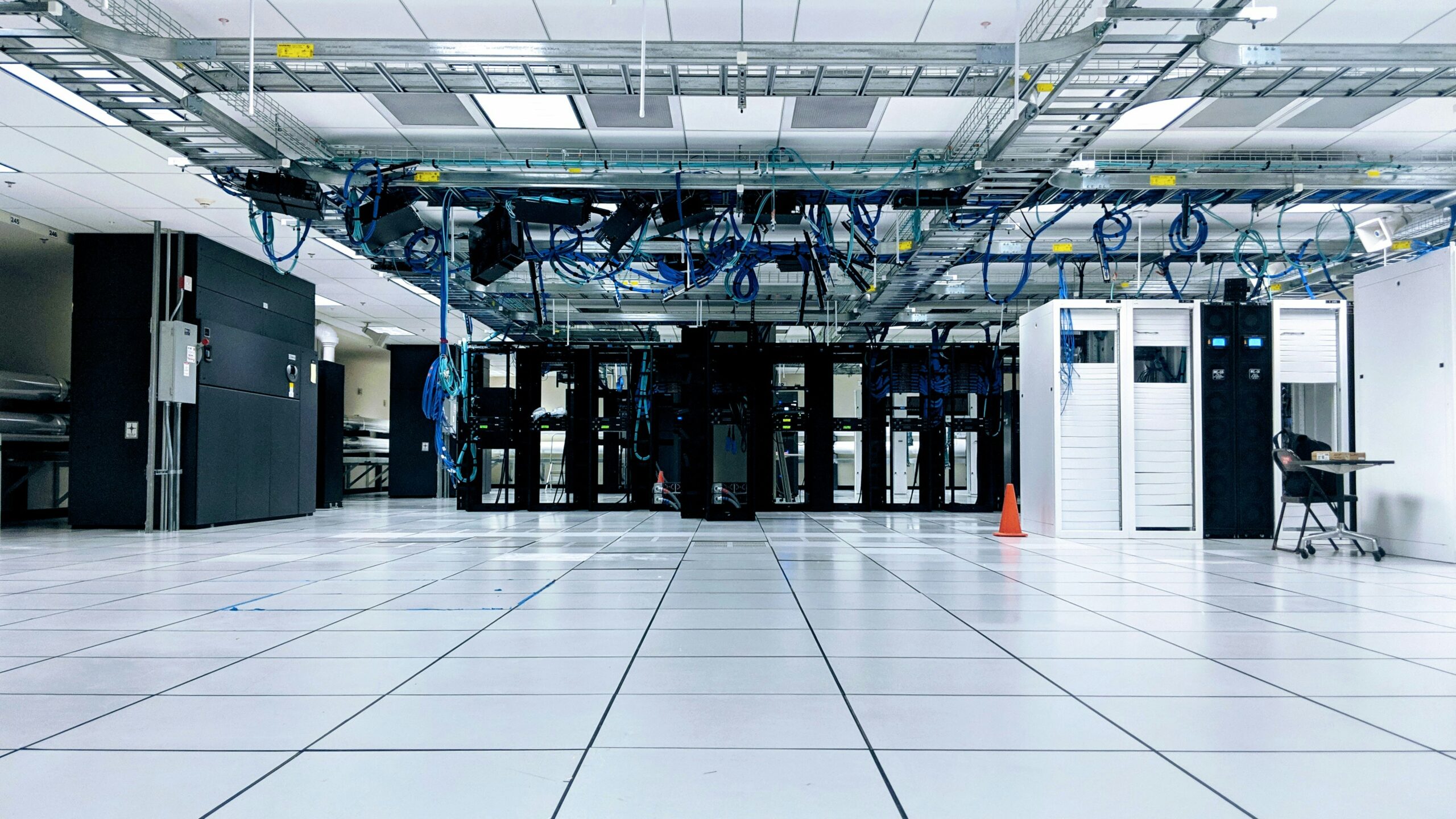
One of the most significant shifts is playing out in the physical infrastructure of the crypto industry. Bitcoin miners are shifting away from solely securing the network to becoming key infrastructure providers for the AI boom. The logic is straightforward: AI companies urgently need access to vast amounts of cheap power, pre-built facilities, and cooling systems, assets that large-scale mining operations already possess.
This “great mining pivot” has triggered a wave of multi-billion dollar deals. Miners like Core Scientific, IREN, and Hut 8 have signed contracts worth tens of billions of dollars to lease their facilities to AI hyperscalers such as CoreWeave, Microsoft, and AWS. For many miners, this is a strategic necessity, as profit margins were squeezed by the 2024 Bitcoin halving. The shift is so pronounced that for some of the largest listed mining companies, mining itself is expected to account for less than a fifth of their revenue by late 2026.
This reallocation of resources carries deep implications. It diverts substantial power capacity away from the Bitcoin network, potentially affecting its long-term security as the block subsidy continues to fall. At the same time, it tightens the financial connection between the crypto and AI sectors, making Bitcoin’s price more sensitive to the performance of the tech industry. Recent market volatility, where Bitcoin dropped alongside semiconductor stocks following the release of a new Chinese AI model, directly reflects this new linkage.
The Rise of the Agentic Economy
While infrastructure forms the base, the most transformative development is the rise of “agentic finance” and the broader “agentic economy.” AI agents, autonomous software programs, are becoming independent economic participants on the blockchain, moving beyond simple rule-based bots to use large language models for reasoning and decision-making.
Major exchanges are racing to integrate AI agents directly into their platforms. Kraken has rebuilt its mobile app around an AI “financial intelligence” system that recommends trades based on user goals, turning complex portfolio management into plain-English prompts. Rivals like OKX and Coinbase have released tools that let AI agents make payments, trade, and complete on-chain tasks autonomously. The scale of this activity is expanding quickly, with agentic payment activity on Coinbase’s Base network surpassing 100 million transactions. Nansen, a leading on-chain analytics firm, introduced its own AI-powered trading tools, allowing users to move from insight to action in one interface, powered by over 500 million labeled wallet addresses.
This movement is giving rise to entirely new markets. OKX launched a marketplace where AI agents can hire one another, settle payments automatically, and build portable on-chain reputations. This vision is supported by a 27-firm consortium, including OKX and MetaMask, which created an “Internet Court” to handle disputes between AI agents. The total market for the “agentic economy” could reach trillions of dollars in the coming years.
Solving the Dilemmas of AI with Blockchain
The merging of AI and blockchain is not only about building new financial tools; it also addresses some of AI’s toughest problems. The central challenge is trust.
AI models are opaque and can make mistakes or be manipulated. When an AI agent has the authority to execute financial transactions, the ability to audit its actions becomes essential. Blockchain provides an immutable, transparent record of every action an agent takes, solving the problem of “who audits the auditor.”
However, giving an AI a private key poses a major security risk. To counter this, new cryptographic infrastructure is being introduced. Mysten Labs launched Sui Seal MPC, a system using multi-party computation that allows AI agents to sign transactions without directly holding a private key. This system distributes key shares across independent nodes, reducing the risk of a single point of failure, and uses Move smart contracts to enforce spending caps and other rules. It’s a crucial step toward deploying truly autonomous agents safely and in a controlled way.
The market is also witnessing the rise of new economic models, such as “AI service tokens,” which blur the line between utility, payment, and security. Projects like Bittensor are building decentralized networks where tokens incentivize the creation and validation of AI models. Bittensor’s network-wide revenue reached $43 million in Q1 2026, and its community collaboratively trained a 72-billion-parameter model that matched commercially available open-source alternatives. This points to a future where AI development, training, and inference are driven not by centralized giants but by a decentralized, token-incentivized network of participants.
The New Frontier and Regulatory Headwinds
Despite the rapid progress, major challenges persist. Regulatory uncertainty still weighs on the sector. Traders have lowered the probability of the CLARITY Act, a key piece of US crypto legislation, becoming law to a record low of 32%. The multi-function nature of AI tokens creates classification challenges for regulators still struggling to define them.
Moreover, the infrastructure for this emerging economy remains early-stage. Security risks are a continuing concern, as a single vulnerability in a smart contract or a successful “prompt injection” attack could have severe financial consequences. The same technology that promises to democratize AI also raises deep questions about governance, accountability, and liability.
ztoog Conclusion
Mid-2026 marks a turning point. The convergence of AI and crypto is moving from theoretical concept to a tangible reality that is reshaping the financial infrastructure of the internet. The mining industry is repurposing its power for AI, exchanges are evolving into platforms for autonomous agents, and blockchain is becoming the essential trust layer for a world of machine-driven commerce. This convergence opens a new economic frontier, but one where builders, investors, and regulators must navigate a landscape filled with both immense opportunity and significant risk.
by JOHN STEVENSON