Close Menu
Ztoog
    What's Hot
    Gadgets

    CES 2024 Preview: Get Ready for a ‘Tsunami’ of AI

    Mobile

    Samsung Galaxy Watch 6 Classic Review: Bezelicious!

    Science

    The ADN of Things: How to Store Information on Almost Any Object

    Important Pages:
    • About Us
    • Contact us
    • Privacy Policy
    • Terms & Conditions
    Facebook X (Twitter) Instagram Pinterest
    Facebook X (Twitter) Instagram Pinterest
    Ztoog
    • Home
    • The Future

      What is Project Management? 5 Best Tools that You Can Try

      Operational excellence strategy and continuous improvement

      Hannah Fry: AI isn’t as powerful as we think

      FanDuel goes all in on responsible gaming push with new Play with a Plan campaign

      Gettyimages.com Is the Best Website on the Internet Right Now

    • Technology

      Iran war: How could it end?

      Democratic senators question CFTC staffing cuts in Chicago enforcement office

      Google’s Cloud AI lead on the three frontiers of model capability

      AMD agrees to backstop a $300M loan from Goldman Sachs for Crusoe to buy AMD AI chips, the first known case of AMD chips used as debt collateral (The Information)

      Productivity apps failed me when I needed them most

    • Gadgets

      macOS Tahoe 26.3.1 update will “upgrade” your M5’s CPU to new “super” cores

      Lenovo Shows Off a ThinkBook Modular AI PC Concept With Swappable Ports and Detachable Displays at MWC 2026

      POCO M8 Review: The Ultimate Budget Smartphone With Some Cons

      The Mission: Impossible of SSDs has arrived with a fingerprint lock

      6 Best Phones With Headphone Jacks (2026), Tested and Reviewed

    • Mobile

      Android’s March update is all about finding people, apps, and your missing bags

      Watch Xiaomi’s global launch event live here

      Our poll shows what buyers actually care about in new smartphones (Hint: it’s not AI)

      Is Strava down for you? You’re not alone

      The Motorola Razr FIFA World Cup 2026 Edition was literally just unveiled, and Verizon is already giving them away

    • Science

      Big Tech Signs White House Data Center Pledge With Good Optics and Little Substance

      Inside the best dark matter detector ever built

      NASA’s Artemis moon exploration programme is getting a major makeover

      Scientists crack the case of “screeching” Scotch tape

      Blue-faced, puffy-lipped monkey scores a rare conservation win

    • AI

      Online harassment is entering its AI era

      Meet NullClaw: The 678 KB Zig AI Agent Framework Running on 1 MB RAM and Booting in Two Milliseconds

      New method could increase LLM training efficiency | Ztoog

      The human work behind humanoid robots is being hidden

      NVIDIA Releases DreamDojo: An Open-Source Robot World Model Trained on 44,711 Hours of Real-World Human Video Data

    • Crypto

      SEC Vs. Justin Sun Case Ends In $10M Settlement

      Google paid startup Form Energy $1B for its massive 100-hour battery

      Ethereum Breakout Alert: Corrective Channel Flip Sparks Impulsive Wave

      Show Your ID Or No Deal

      Jane Street sued for alleged front-running trades that accelerated Terraform Labs meltdown

    Ztoog
    Home » Changing the conversation in health care | Ztoog
    AI

    Changing the conversation in health care | Ztoog

    Facebook Twitter Pinterest WhatsApp
    Changing the conversation in health care | Ztoog
    Share
    Facebook Twitter LinkedIn Pinterest WhatsApp

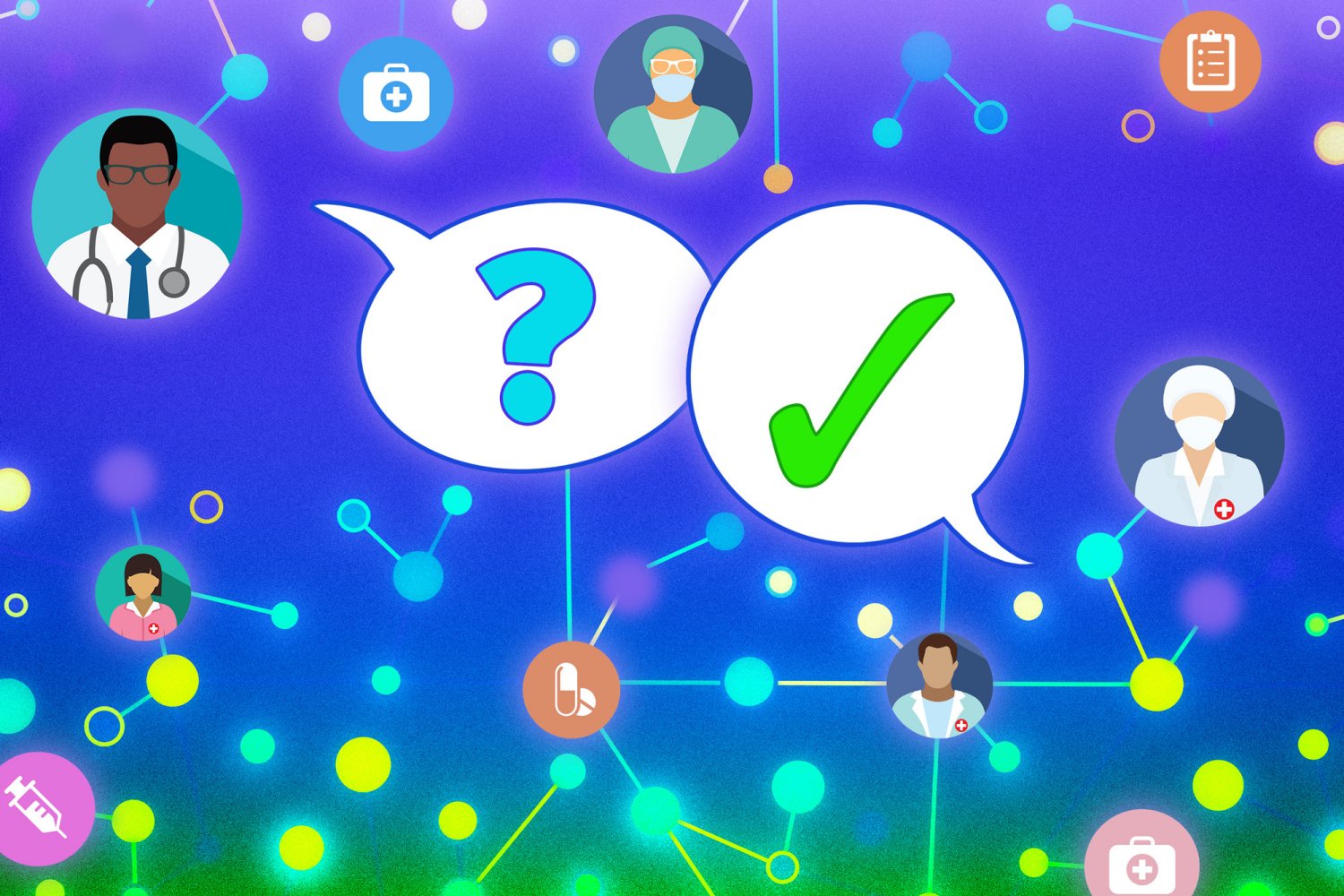
    Generative synthetic intelligence is reworking the methods people write, learn, converse, assume, empathize, and act inside and throughout languages and cultures. In health care, gaps in communication between sufferers and practitioners can worsen affected person outcomes and stop enhancements in follow and care. The Language/AI Incubator, made potential by way of funding from the MIT Human Insight Collaborative (MITHIC), presents a possible response to those challenges. 

    The undertaking envisions a analysis neighborhood rooted in the humanities that may foster interdisciplinary collaboration throughout MIT to deepen understanding of generative AI’s impression on cross-linguistic and cross-cultural communication. The undertaking’s deal with health care and communication seeks to construct bridges throughout socioeconomic, cultural, and linguistic strata.

    The incubator is co-led by Leo Celi, a doctor and the analysis director and senior analysis scientist with the Institute for Medical Engineering and Science (IMES), and Per Urlaub, professor of the follow in German and second language research and director of MIT’s Global Languages program. 

    “The basis of health care delivery is the knowledge of health and disease,” Celi says. “We’re seeing poor outcomes despite massive investments because our knowledge system is broken.”

    An opportunity collaboration

    Urlaub and Celi met throughout a MITHIC launch occasion. Conversations throughout the occasion reception revealed a shared curiosity in exploring enhancements in medical communication and follow with AI.

    “We’re trying to incorporate data science into health-care delivery,” Celi says. “We’ve been recruiting social scientists [at IMES] to help advance our work, because the science we create isn’t neutral.”

    Language is a non-neutral mediator in health care supply, the workforce believes, and is usually a boon or barrier to efficient remedy. “Later, after we met, I joined one of his working groups whose focus was metaphors for pain: the language we use to describe it and its measurement,” Urlaub continues. “One of the questions we considered was how effective communication can occur between doctors and patients.”

    Technology, they argue, impacts informal communication, and its impression relies on each customers and creators. As AI and enormous language fashions (LLMs) achieve energy and prominence, their use is broadening to incorporate fields like health care and wellness. 

    Rodrigo Gameiro, a doctor and researcher with MIT’s Laboratory for Computational Physiology, is one other program participant. He notes that work at the laboratory facilities accountable AI improvement and implementation. Designing methods that leverage AI successfully, notably when contemplating challenges associated to speaking throughout linguistic and cultural divides that may happen in health care, calls for a nuanced method. 

    “When we build AI systems that interact with human language, we’re not just teaching machines how to process words; we’re teaching them to navigate the complex web of meaning embedded in language,” Gameiro says.

    Language’s complexities can impression remedy and affected person care. “Pain can only be communicated through metaphor,” Urlaub continues, “but metaphors don’t always match, linguistically and culturally.” Smiley faces and one-to-10 scales — ache measurement instruments English-speaking medical professionals could use to evaluate their sufferers — could not journey effectively throughout racial, ethnic, cultural, and language boundaries.

    “Science has to have a heart” 

    LLMs can doubtlessly assist scientists enhance health care, though there are some systemic and pedagogical challenges to think about. Science can deal with outcomes to the exclusion of the folks it’s meant to assist, Celi argues. “Science has to have a heart,” he says. “Measuring students’ effectiveness by counting the number of papers they publish or patents they produce misses the point.”

    The level, Urlaub says, is to analyze fastidiously whereas concurrently acknowledging what we don’t know, citing what philosophers name Epistemic Humility. Knowledge, the investigators argue, is provisional, and at all times incomplete. Deeply held beliefs could require revision in gentle of latest proof. 

    “No one’s mental view of the world is complete,” Celi says. “You need to create an environment in which people are comfortable acknowledging their biases.”

    “How do we share concerns between language educators and others interested in AI?” Urlaub asks. “How do we identify and investigate the relationship between medical professionals and language educators interested in AI’s potential to aid in the elimination of gaps in communication between doctors and patients?” 

    Language, in Gameiro’s estimation, is greater than only a device for communication. “It reflects culture, identity, and power dynamics,” he says. In conditions the place a affected person won’t be snug describing ache or discomfort due to the doctor’s place as an authority, or as a result of their tradition calls for yielding to these perceived as authority figures, misunderstandings might be harmful. 

    Changing the conversation

    AI’s facility with language might help medical professionals navigate these areas extra fastidiously, offering digital frameworks providing helpful cultural and linguistic contexts in which affected person and practitioner can depend on data-driven, research-supported instruments to enhance dialogue. Institutions must rethink how they educate medical professionals and invite the communities they serve into the conversation, the workforce says. 

    ‘We need to ask ourselves what we truly want,” Celi says. “Why are we measuring what we’re measuring?” The biases we carry with us to those interactions — medical doctors, sufferers, their households, and their communities — stay boundaries to improved care, Urlaub and Gameiro say.

    “We want to connect people who think differently, and make AI work for everyone,” Gameiro continues. “Technology without purpose is just exclusion at scale.”

    “Collaborations like these can allow for deep processing and better ideas,” Urlaub says.

    Creating areas the place concepts about AI and health care can doubtlessly turn out to be actions is a key aspect of the undertaking. The Language/AI Incubator hosted its first colloquium at MIT in May, which was led by Mena Ramos, a doctor and the co-founder and CEO of the Global Ultrasound Institute. 

    The colloquium additionally featured shows from Celi, in addition to Alfred Spector, a visiting scholar in MIT’s Department of Electrical Engineering and Computer Science, and Douglas Jones, a senior employees member in the MIT Lincoln Laboratory’s Human Language Technology Group. A second Language/AI Incubator colloquium is deliberate for August.

    Greater integration between the social and exhausting sciences can doubtlessly enhance the probability of creating viable options and decreasing biases. Allowing for shifts in the methods sufferers and medical doctors view the relationship, whereas providing every shared possession of the interplay, might help enhance outcomes. Facilitating these conversations with AI could velocity the integration of those views. 

    “Community advocates have a voice and should be included in these conversations,” Celi says. “AI and statistical modeling can’t collect all the data needed to treat all the people who need it.”

    Community wants and improved academic alternatives and practices needs to be coupled with cross-disciplinary approaches to information acquisition and switch. The methods folks see issues are restricted by their perceptions and different elements. “Whose language are we modeling?” Gameiro asks about constructing LLMs. “Which varieties of speech are being included or excluded?” Since that means and intent can shift throughout these contexts, it’s essential to recollect these when designing AI instruments. 

    “AI is our chance to rewrite the rules”

    While there’s a number of potential in the collaboration, there are critical challenges to beat, together with establishing and scaling the technological means to enhance patient-provider communication with AI, extending alternatives for collaboration to marginalized and underserved communities, and reconsidering and revamping affected person care. 

    But the workforce isn’t daunted.

    Celi believes there are alternatives to handle the widening hole between folks and practitioners whereas addressing gaps in health care. “Our intent is to reattach the string that’s been cut between society and science,” he says. “We can empower scientists and the public to investigate the world together while also acknowledging the limitations engendered in overcoming their biases.”

    Gameiro is a passionate advocate for AI’s capability to vary all the pieces we find out about medication. “I’m a medical doctor, and I don’t think I’m being hyperbolic when I say I believe AI is our chance to rewrite the rules of what medicine can do and who we can reach,” he says.

    “Education changes humans from objects to subjects,” Urlaub argues, describing the distinction between disinterested observers and lively and engaged contributors in the new care mannequin he hopes to construct. “We need to better understand technology’s impact on the lines between these states of being.”

    Celi, Gameiro, and Urlaub every advocate for MITHIC-like areas throughout health care, locations the place innovation and collaboration are allowed to happen with out the sorts of arbitrary benchmarks establishments have beforehand used to mark success.

    “AI will transform all these sectors,” Urlaub believes. “MITHIC is a generous framework that allows us to embrace uncertainty with flexibility.”

    “We want to employ our power to build community among disparate audiences while admitting we don’t have all the answers,” Celi says. “If we fail, it’s because we failed to dream big enough about how a reimagined world could look.”

    Share. Facebook Twitter Pinterest LinkedIn WhatsApp

    Related Posts

    AI

    Online harassment is entering its AI era

    AI

    Meet NullClaw: The 678 KB Zig AI Agent Framework Running on 1 MB RAM and Booting in Two Milliseconds

    AI

    New method could increase LLM training efficiency | Ztoog

    AI

    The human work behind humanoid robots is being hidden

    Mobile

    Our poll shows what buyers actually care about in new smartphones (Hint: it’s not AI)

    AI

    NVIDIA Releases DreamDojo: An Open-Source Robot World Model Trained on 44,711 Hours of Real-World Human Video Data

    AI

    Personalization features can make LLMs more agreeable | Ztoog

    AI

    AI is already making online crimes easier. It could get much worse.

    Leave A Reply Cancel Reply

    Follow Us
    • Facebook
    • Twitter
    • Pinterest
    • Instagram
    Top Posts
    Gadgets

    7 Best TV Deals to Catch Up on Oscar-Nominated Films (or the Super Bowl)

    It’s virtually Super Bowl Sunday, which implies pleasant soccer gatherings, gagillion-dollar commercials, and, naturally, huge…

    Technology

    Caroline Ellison, Star Witness in Sam Bankman-Fried Trial, Says He Made ‘Terrible Mistakes’

    A lawyer for Sam Bankman-Fried on Thursday sought to undermine the testimony of Caroline Ellison,…

    The Future

    Amazon Prime Day 2024 will take place on July 16th and 17th

    As anticipated, Amazon’s annual gross sales occasion for Prime subscribers will as soon as once…

    The Future

    How to Get Around the US CapCut ban

    CapCut simplifies video enhancing and creation, making it superb for social media influencers on Instagram,…

    AI

    Creating bespoke programming languages for efficient visual AI systems | Ztoog

    A single {photograph} affords glimpses into the creator’s world — their pursuits and emotions a…

    Our Picks
    AI

    With generative AI, MIT chemists quickly calculate 3D genomic structures | Ztoog

    Mobile

    iQOO Z8x to come with Snapdragon 6 Gen 1, 6,000 mAh battery

    AI

    Alibaba Introduces Group Sequence Policy Optimization (GSPO): An Efficient Reinforcement Learning Algorithm that Powers the Qwen3 Models

    Categories
    • AI (1,560)
    • Crypto (1,827)
    • Gadgets (1,870)
    • Mobile (1,910)
    • Science (1,939)
    • Technology (1,862)
    • The Future (1,716)
    Most Popular
    Technology

    22 Best Prime Day Laptop Deals Still Available

    Technology

    How to Fix “AI’s Original Sin” – O’Reilly

    Science

    In a Fierce Desert, Microbe ‘Crusts’ Show How Life Tamed the Land

    Ztoog
    Facebook X (Twitter) Instagram Pinterest
    • Home
    • About Us
    • Contact us
    • Privacy Policy
    • Terms & Conditions
    © 2026 Ztoog.

    Type above and press Enter to search. Press Esc to cancel.