
The two separate trends of cryptocurrency and artificial intelligence are no longer operating in parallel; they have merged into a single technological and economic force. Their integration is impacting everything from the physical world and the financial markets to the basic notion of economic agency. By mid-2026, the “hype cycle” has shifted into tangible, often disruptive, practical innovations that mark the dawn of a new age of machine-driven commerce and decentralized intelligence.
The Great Mining Pivot: From Hashrate to High-Performance Compute
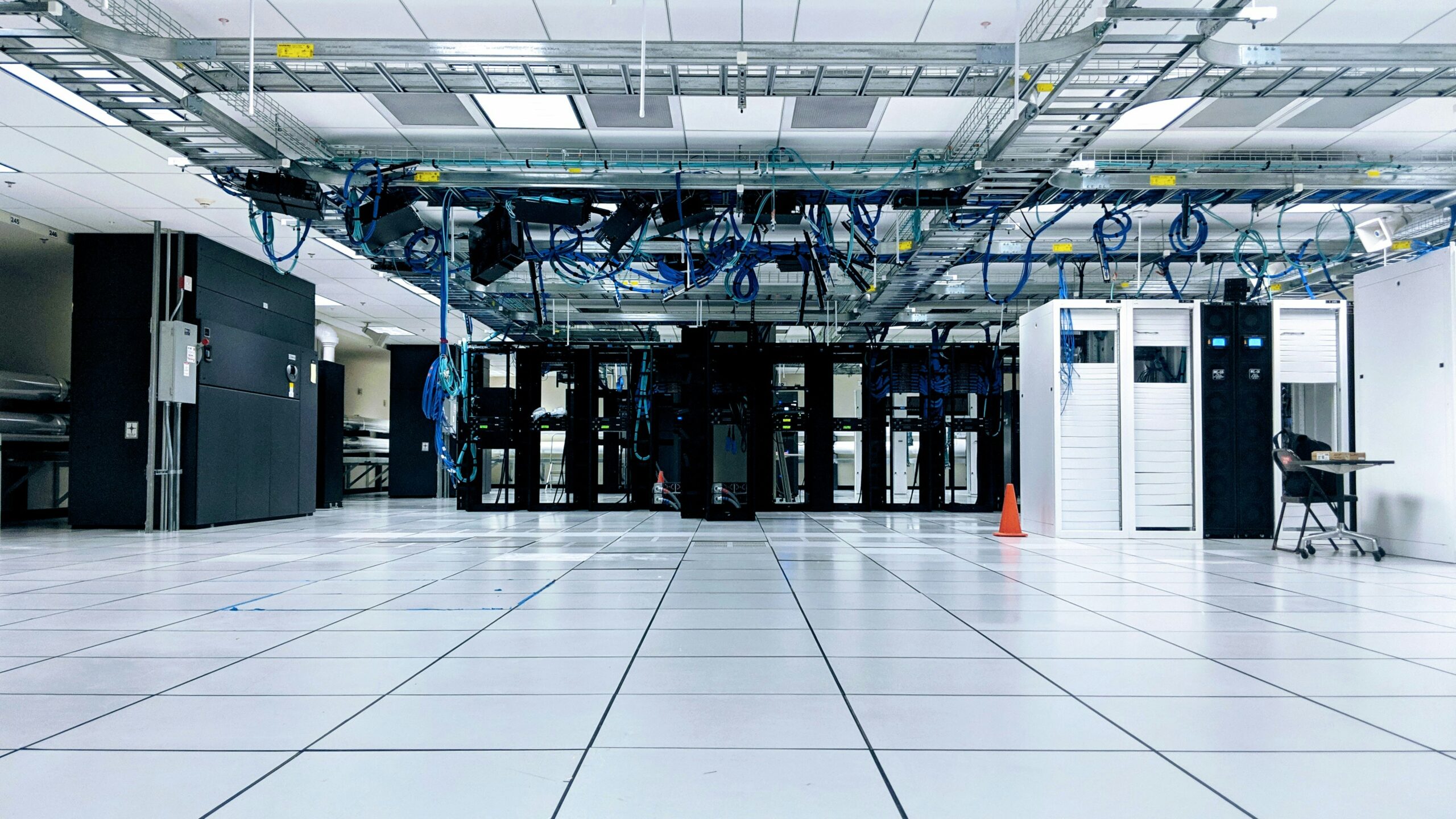
One of the most interesting changes is happening in the physical aspects of the cryptocurrency industry. Bitcoin miners are changing from being merely network security people to becoming critical AI infrastructure providers. The logic is simple: AI companies need huge amounts of inexpensive power, pre-built facilities, and cooling systems that large mining operations already have.
The “great mining pivot” has led to a series of multibillion-dollar deals. Miners such as Core Scientific, IREN, and Hut 8 have signed agreements for tens of billions of dollars to lease their facilities to AI hyperscalers like CoreWeave, Microsoft, and AWS. For many miners, this is a necessity because their profits are shrinking as a result of the 2024 Bitcoin halving. The shift is so dramatic that for some of the largest publicly listed mining companies, mining is projected to be less than a fifth of their revenue by late 2026.
This has major ramifications. The new resource deployment will divert considerable energy resources away from the Bitcoin network, which may affect the security of the network in the long run as the block subsidy continues to decline. It also ties the Bitcoin and the AI sectors closer financially, which means that the Bitcoin price will be more sensitive to the performance of the technology sector. The recent market fluctuations, where Bitcoin and semiconductor stocks were affected by the release of a new Chinese AI model, are a direct result of this newly established relationship.
The Rise of the Agentic Economy
While infrastructure is a fundamental building block of the crypto-economy, the most revolutionary advancement is the advent of agentic finance and the broader “agentic economy.” Agents are becoming self-contained economic players on the blockchain. These autonomous AI programs have gone beyond being simple rule-based bots and are now employing deep language models to reason and make decisions.
The large cryptocurrency exchanges are working hard to integrate AI agents into their platforms. Kraken has completely revamped its mobile app around an AI-powered financial intelligence system that makes trading recommendations based on user goals, simplifying the complex portfolio management process. Exchange competitors like OKX and Coinbase have introduced services that allow AI agents to send payments, trade, and complete on-chain operations automatically. This is becoming increasingly common, with agent payments on the Coinbase Base network exceeding 100 million transactions. Nansen, one of the leading blockchain analytics companies, has just released new AI-based trading services. They have made it easier for users to go from insights to actions in one place using over 500 million labeled wallet addresses.
This trend is creating entirely new markets. OKX has recently established a market where AI agents can hire each other, settle their payments automatically and transfer their reputations on the blockchain. This vision has been supported by a consortium of 27 companies including OKX and MetaMask, which has created an “Internet Court” to deal with disputes between AI agents. The market size of the “agenttic economy” could reach trillions of dollars in the next few years.
Solving the Dilemmas of AI with Blockchain
The AI-blockchain combination is not only about creating new financial tools but also solving some of AI’s most challenging issues. The main issue is trust.
AI models are inscrutable and can make errors or be corrupted. When an AI agent has the ability to carry out financial transactions, it is essential to have the capability to audit its actions. The blockchain is an immutable, transparent platform that allows for the transparency of every action an agent takes. This would eliminate the problem of “who audits the auditor?”
However, a private key would be a massive security risk. As a result, new cryptographic technology is being developed. Mysten Labs recently introduced Sui Seal MPC, based on multi-party computation, which allows AI agents to sign transactions without accessing their private keys. The system disperses key shares across multiple independent nodes to minimize a single point of failure. It also leverages Move smart contracts to enforce spending limits and other regulations. This is a crucial step towards safely and responsibly deploying truly autonomous agents.
The market is also seeing the emergence of new economic structures, such as “AI service tokens” that blur the line between utility, payment, and security. Organizations such as Bittensor (https://www.bittensor.com/) are creating decentralized platforms where participants can earn tokens to train and validate models. Bittennso’s total network revenue was $43 million in Q1 2026, and the community created a 72 billion-parameter model that could beat commercial open-source alternatives. This is a promising sign for the future of AI modeling, training, and inference that is not controlled by a few big players but instead by countless individuals with incentives from tokens.
The New Frontier and Regulatory Headwinds
In spite of the quick progress, the AI space is facing some hurdles. One of these hurdles is the regulatory uncertainty. Traders have lowered their confidence that the CLARITY Act, which is a crucial piece of crypto legislation in the US, will be passed to a record low of 32%. Because of the diverse use cases for AI tokens, the regulators have been challenged in classifying them.
Furthermore, the underlying infrastructure for this new economy is in its infancy. There is still a high risk of security breaches, as one bug in a smart contract or a successful “prompt injection” attack could cause a lot of financial damage. The technology that will enable the democratization of AI also brings a host of issues regarding governance, accountability, and liability.
ztoog Conclusion
Mid-2026 is a pivotal moment. The convergence of AI and crypto is going from a dream to reality and is already disrupting the financial architecture of the internet. Mining is being transformed into a source of AI, exchanges are becoming home to bots, and blockchain is becoming the trust layer of the future of internet commerce. This is paving the way for a new economic frontier, but one where builders, investors, and regulators will need to navigate a vast and diverse landscape full of opportunity and risk.
by JOHN STEVENSON